1624 W War Memorial Dr, Peoria, IL 61614

Getting Your Dog Back to Comfortable Movement
If your dog has suddenly gone lame in a hind leg, a torn cranial cruciate ligament (often just called a CCL tear) is one of the most likely culprits. It's one of the most common orthopedic injuries we see in dogs, and it can range from a nagging, gradual limp to a sudden inability to bear weight at all.
Our surgeons have extensive experience performing Tibial Plateau Leveling Osteotomy, or TPLO, widely considered one of the most reliable surgical solutions for this injury. It's worth understanding what TPLO actually does, because it's not what most people assume. Rather than repairing the torn ligament itself, TPLO changes the mechanics of the knee joint entirely, so the joint stays stable without needing that ligament to do its job. Over time, this allows dogs to return to normal, pain-free movement.
Recognizing the Signs of a CCL Tear
The cranial cruciate ligament sits inside the knee and keeps the tibia from sliding forward against the femur. When it tears, whether partially or completely, the joint loses that stability. The result is pain, inflammation, and, left unaddressed, progressive arthritis in the joint.
Watch for these signs:
- Sudden lameness in a back leg, often after running, jumping, or a sharp twist
- Trouble rising, sitting, or climbing stairs
- Sitting with the affected leg held out to the side, rather than tucked normally
- Swelling around the knee
- Reduced activity or reluctance to exercise, even if not visibly limping
Some dogs tear the ligament suddenly and completely. Others develop a partial tear that worsens gradually, which can make the injury easy to underestimate at first. Breeds like Labrador Retrievers, Rottweilers, and Newfoundlands are more prone to this injury than others, though it can happen to any dog.
Why Vets Recommend TPLO
TPLO works by cutting and rotating the top of the tibia, which changes the slope of the tibial plateau. That small adjustment shifts the forces acting on the knee, so the joint stays stable during normal weight-bearing movement, even without a working cruciate ligament.
For larger or more active dogs in particular, TPLO tends to outperform other surgical options because it:
- Provides strong, durable joint stability over the long term
- Allows many dogs to return to normal or near-normal activity levels
- Slows the progression of arthritis compared to non-surgical management
- Has a well-established track record across a wide range of breeds and sizes
That said, TPLO isn't automatically the right call for every dog. Our veterinarians evaluate your dog's size, activity level, and the severity of the tear before recommending TPLO over another treatment approach.
Confirming the Diagnosis First
Before recommending surgery, we perform a complete orthopedic exam, which usually includes:
- Manual manipulation of the joint to check for instability
- Digital x-rays to evaluate the joint and rule out other possible causes
- A check of the opposite knee, since dogs who tear one ligament are at higher risk of tearing the other down the line
This step matters. A thorough workup gives our surgical team the precision they need to plan the procedure correctly the first time.
Surgery and What Recovery Looks Like
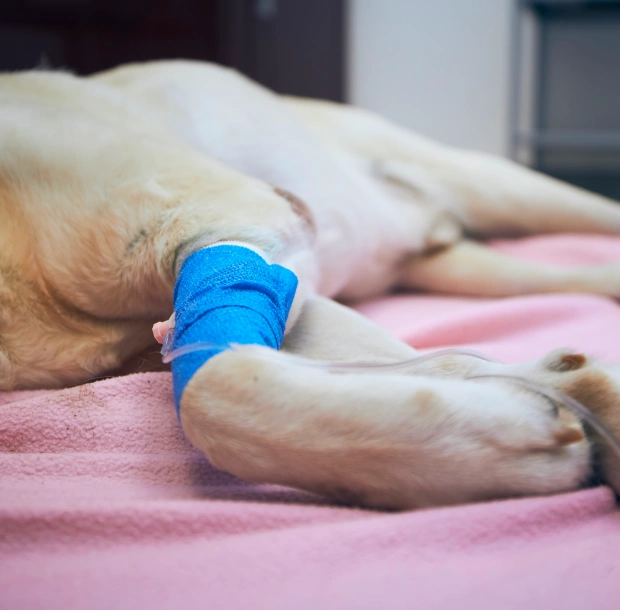
Every TPLO procedure starts with a full preoperative evaluation, including a physical exam and pre-anesthetic bloodwork within 30 days of surgery. Once your dog is cleared, the procedure is performed under a personalized anesthesia plan, with a certified veterinary technician monitoring continuously throughout. Your dog also receives IV fluid therapy and medication to manage pain and nausea during the procedure.
Recovery is gradual by design, since the bone needs time to heal properly around the new joint mechanics. You'll get detailed home-care instructions covering activity restriction, incision care, medication, and an e-collar if needed to prevent licking at the site. Follow-up visits, including recheck x-rays, let us track healing before your dog works back up to normal activity. Many dogs start putting weight on the leg within the first few weeks, but sticking closely to the recovery plan really is what determines the long-term outcome.
Schedule a TPLO Consultation
If your dog is showing signs of a cruciate ligament injury, our surgical team can help you understand whether TPLO is the right path forward. Call Meadowbrook Veterinary Clinic, South Peoria today to schedule a TPLO consultation and learn how we can help restore your dog's comfort, mobility, and quality of life.
Compassionate Care and a
Warm Welcome for Every Pet
